
The Healthcare Challenge Behind a Technology Breakthrough
When Access to Medical Expertise Becomes the Real Challenge
Healthcare innovation is often associated with sophisticated hospital equipment, groundbreaking medicines or new treatments developed in research laboratories. Yet some of the most consequential advances begin with a more fundamental question: how can existing medical knowledge reach people who need it, regardless of where they live or how easily they can access a specialist?
This question sits at the intersection of medicine, technology and entrepreneurship. It is also central to the work of Saudi health-tech startup SDM, which is developing artificial intelligence solutions intended to support the early detection of chronic diseases.
The company recently received international recognition after finishing as runner-up in the 2026 London Business School MENA Startup Competition. The competition’s final took place in Dubai on October 14, with SDM receiving $15,000 in prize funding. The result placed the Saudi venture among the competition’s top three startups, alongside UAE-based environmental technology company Persium and real-estate technology company Frank AI. According to London Business School, the competition attracted nearly 100 applications from across the Middle East and North Africa.
For SDM, the recognition represents more than a moment of visibility. It highlights the growing importance of healthcare technology businesses that focus on practical problems, measurable clinical needs and the potential to make specialist-supported services more accessible.
At the centre of the company’s work is SAARIA, an artificial intelligence-powered technology designed to analyse retinal images and support the early identification of eye-related health problems, particularly those associated with diabetes.
The opportunity is significant because many chronic conditions develop gradually. Patients may not experience obvious symptoms during the early stages, while access to the appropriate diagnostic services can depend on geography, affordability, appointment availability and the capacity of healthcare providers.
A technology that helps healthcare professionals identify potential problems earlier could therefore contribute to a more responsive healthcare system. It may allow screening to take place in settings where specialist expertise is not immediately available, helping medical teams determine which patients require further assessment.
However, the value of such innovation extends beyond the software itself. It depends on the quality of the clinical evidence, the reliability of the technology, the way healthcare organisations implement it and the ability of patients to receive appropriate follow-up care.
SDM’s development offers a useful perspective on how entrepreneurs can translate a healthcare challenge into a technology-led business opportunity. It also illustrates why leadership that understands both clinical practice and the operational realities of healthcare can be particularly valuable when building a medical technology company.
Selwa Al-Hazzaa: Bringing Clinical Experience Into Entrepreneurship
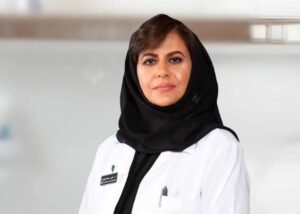
The story of SDM is closely connected to its founder and chair, Selwa Al-Hazzaa, whose background as an ophthalmologist informs the company’s approach to healthcare innovation.
For medical professionals who move into entrepreneurship, the transition involves a different way of approaching familiar problems. A clinician may recognise an unmet need through direct experience with patients, but building a sustainable solution requires additional capabilities, including product development, commercial planning, regulatory understanding, technology partnerships and investment strategy.
That transition can be especially important in healthcare, where a promising idea must work within complex clinical environments rather than simply demonstrate technical performance.
A physician who has encountered diagnostic delays or limitations in specialist access may approach product development differently from an entrepreneur entering the sector without clinical experience. Clinical knowledge can help identify which problems matter most, which stages of a workflow create friction and what information a healthcare professional needs before making a decision.
This does not eliminate the need for engineers, data scientists, regulatory specialists or business leaders. Instead, it creates an opportunity for multidisciplinary teams to work towards a clearly defined healthcare objective.
Al-Hazzaa’s leadership of SDM reflects this intersection between medical expertise and entrepreneurial ambition. Rather than treating artificial intelligence as a technology searching for an application, the company’s work is directed towards a specific healthcare challenge: supporting earlier identification of disease and helping address gaps in access to specialised eye care.
That distinction matters in a crowded technology market. Artificial intelligence can generate excitement because of its ability to analyse large quantities of information, identify patterns and automate aspects of complex processes. Yet the strongest healthcare applications begin with a well-understood clinical need and a realistic explanation of how technology might improve the existing process.
In this context, medical experience can provide a valuable foundation for product strategy. It helps founders ask whether a tool fits into clinical workflows, whether its outputs are understandable to healthcare professionals and whether the proposed intervention addresses a meaningful problem for patients.
For women building companies in science, medicine and technology, this combination of professional expertise and commercial leadership also creates a broader lesson. Entrepreneurship does not necessarily require abandoning a previous career or separating professional knowledge from business ambition. In some cases, the experience gained in one field becomes the basis for identifying opportunities in another.
SDM’s development demonstrates how a healthcare problem observed through clinical practice can become the starting point for a technology venture with ambitions beyond a single market.
Understanding SAARIA and Its Potential Role in Eye Care
SAARIA is SDM’s artificial intelligence-based retinal screening technology. According to information reported by Arab News, the system analyses retinal images and can generate diagnostic results within minutes without requiring a physician to be physically present at the screening location.
The workflow described by the company uses one retinal image from each eye, captured without pupil dilation. The images are processed through a Saudi-hosted cloud environment, and the system generates a bilingual Arabic-English report. The company has also described performance exceeding 90 percent sensitivity under its reported testing conditions.
These technical details help explain the business problem SAARIA is intended to address.
Traditional specialist-dependent diagnostic pathways can require patients to travel to healthcare facilities, arrange appointments and wait for access to an appropriately trained professional. In areas where specialist services are limited, the distance between initial screening and specialist evaluation can create additional barriers.
An AI-supported screening workflow could help reduce some of these obstacles by making image analysis available at the point where the patient is examined. Healthcare organisations could potentially use such tools in primary care settings, diabetes clinics or other appropriately equipped screening environments, subject to clinical validation, regulatory requirements and local implementation arrangements.
The technology’s ability to produce a report quickly may also support operational efficiency. Healthcare teams could have access to information that helps them decide whether a patient needs additional assessment, specialist referral or further investigation.
Nevertheless, it is important to distinguish between screening support and a complete medical diagnosis. A high sensitivity figure does not establish that a system is suitable for every patient population, clinical environment or disease category. Performance depends on the study design, the population being screened, image quality, the condition being assessed and the criteria used to evaluate the results.
AI-supported retinal screening should therefore be understood as a potential component of a wider healthcare pathway, not a replacement for professional judgment or comprehensive medical care.
When appropriately validated and deployed, technologies such as SAARIA could help make the first stage of assessment more accessible. Their ultimate value will depend on whether that initial assessment leads to timely, accurate and appropriate care.
Why Early Detection Matters for Patients Living With Diabetes
Diabetes is one of the clearest examples of why early detection and regular monitoring matter in chronic disease management.
Over time, elevated blood glucose can damage blood vessels throughout the body, including the small vessels in the retina. Diabetic retinopathy can progress without noticeable symptoms during its earlier stages, making regular screening an important part of preventive healthcare.
When screening is delayed, opportunities to identify disease before more serious damage develops may be missed. As the condition advances, treatment can become more complicated, and the risk of vision impairment can increase.
The challenge is not simply to develop a technology that can recognise abnormalities in an image. Healthcare systems must also encourage patients to attend screening appointments, ensure images are captured appropriately, interpret results correctly and provide access to follow-up examinations and treatment.
This is where AI-supported tools may offer a practical advantage. By helping bring retinal image analysis closer to patients, they could support screening programmes that operate in more convenient or geographically accessible settings.
For patients who already visit healthcare facilities for diabetes management, an integrated screening process could make it easier to include eye health in routine care. For healthcare providers, a structured workflow may help organise screening results and identify individuals who require further attention.
However, convenience alone is not enough. Screening programmes must be designed around appropriate clinical protocols, patient consent, data protection, quality assurance and established referral pathways.
A report indicating possible disease must lead to a clear next step. Patients need to understand their results, know when further evaluation is necessary and have access to the medical services recommended by their healthcare team.
This broader perspective helps clarify the opportunity represented by SDM. The potential is not limited to making an image-analysis process faster. It lies in exploring how technology might support a more connected journey from screening to clinical evaluation.
For health-tech entrepreneurs, that is an important distinction. The most meaningful innovation often comes from improving the entire process surrounding a medical decision, rather than concentrating exclusively on the algorithm that produces the result.
Artificial Intelligence, Healthcare Access and Saudi Arabia’s Innovation Economy
Can AI Help Bring Specialist-Supported Screening Closer to Patients?
Geography remains an important factor in healthcare access. Specialist services are often concentrated in larger cities and major medical centres, while patients in smaller communities may have fewer local options.
The problem is particularly relevant to conditions that require regular screening. Even when a country has qualified specialists and modern hospitals, delivering appropriate care to every patient at the right time can be an operational challenge. AI-supported screening offers one possible way to address part of this gap.
A patient may be able to have retinal images captured in an appropriately equipped local setting. A validated system can analyse those images and provide information to support the next stage of the clinical process. If the results indicate a potential concern, the patient can be directed towards a qualified professional for further evaluation.
Such an approach could help healthcare providers use specialist time more strategically, particularly where screening demand is high. It may also allow certain services to be incorporated into existing care pathways rather than requiring every initial assessment to take place at a specialist facility.
Yet the technology does not remove every barrier. Patients still need access to suitable screening equipment, trained personnel, reliable connectivity where cloud processing is used, clear communication and follow-up services. People with more complex conditions may still require direct specialist assessment. Successful deployment therefore requires collaboration between technology companies, healthcare providers, public health authorities and clinical professionals.
For startups such as SDM, the opportunity involves more than building a functioning product. It includes demonstrating that the product can operate reliably in real-world environments and that its use contributes to a meaningful improvement in care delivery.
This is also where business strategy and clinical design intersect. A system that is technically impressive but difficult for healthcare staff to use may struggle to achieve adoption. A product that produces useful results but lacks a clear referral pathway may fail to deliver its intended benefit.
The strongest solutions are likely to be those that fit into the practical realities of healthcare delivery: appointment scheduling, image capture, documentation, patient communication, referrals and ongoing monitoring. For entrepreneurs, understanding these interconnected requirements can be as important as understanding the underlying technology.
The Broader Opportunity for Saudi Health-Tech Companies
Saudi Arabia has been pursuing healthcare transformation alongside wider economic diversification and digital development. Within this changing environment, health technology has the potential to create opportunities for startups working on diagnostics, patient services, clinical data and preventive care.
The Kingdom’s healthcare needs are diverse. They include supporting people living with chronic diseases, improving service coordination, strengthening preventive healthcare and using resources efficiently as demand changes. Technology can contribute to these priorities when it addresses clearly defined problems and is integrated into appropriate clinical and operational systems.
For Saudi health-tech startups, the domestic market can provide an important environment for understanding local healthcare workflows, language requirements, patient expectations and institutional needs. Companies that develop products around these realities may also identify opportunities to adapt their solutions for other markets.
SAARIA’s bilingual reporting is one example of a feature with practical relevance in a regional healthcare environment. Making clinical information available in Arabic and English may support communication among different stakeholders, although the usefulness of any report depends on its clarity, clinical appropriateness and integration into the receiving organisation’s workflow.
Similarly, processing data through a Saudi-hosted cloud environment can be relevant to organisations evaluating data residency, governance and operational requirements. Hosting location alone, however, does not establish that a system satisfies every applicable privacy or cybersecurity obligation. Those requirements must be assessed against the relevant laws, regulations and institutional policies. The broader opportunity is to build health technology that reflects the environment in which it will be used.
That means designing around patient needs, clinical practice, regulatory expectations and the realities of healthcare procurement. It also means developing a business model that can sustain product improvement, customer support, system maintenance and clinical quality assurance. For a startup, these considerations determine whether a promising pilot can become a repeatable service.
International recognition can help a company attract attention to its work, but long-term success depends on execution. Healthcare organisations need credible evidence, reliable systems and confidence that a technology provider will remain capable of supporting the product after deployment.
Saudi health-tech companies that combine local understanding with rigorous product development may be well positioned to compete in a market where healthcare systems increasingly seek solutions that are both innovative and operationally dependable.
Beyond Eye Screening: The Potential of AI in Preventive Healthcare
SDM’s ambitions extend beyond diabetic eye disease. Reporting on the company has described additional AI applications under development intended to identify early risk indicators associated with conditions including hypertension, stroke and Alzheimer’s disease. Al-Hazzaa has also discussed development work involving automated mammogram image analysis for breast cancer detection.
These initiatives suggest a broader interest in using medical data to support earlier assessment of health risks. However, each application presents a different scientific and clinical challenge. A technology developed to analyse retinal images cannot automatically be assumed to work for mammograms or other types of medical data. Every new application requires its own development process, appropriate training data, clinical evaluation and regulatory assessment.
Different diseases also demand different approaches to screening, risk prediction and diagnosis. The signs of a condition may appear in different types of images, clinical measurements or patient histories, and the consequences of a false result can vary considerably.
For this reason, expanding a health-tech platform across multiple conditions requires more than adapting an existing algorithm. It demands specialised clinical expertise, appropriate datasets, carefully defined intended uses and evidence that the product performs safely in its target setting.
The potential remains significant. Earlier identification of risk may create opportunities for medical professionals to investigate a condition before it progresses or to intervene while preventive measures remain effective.
For example, a validated screening tool might help identify individuals who should undergo further assessment. A risk-prediction system could potentially help clinicians prioritise follow-up for people who may need closer monitoring. An image-analysis application might assist trained professionals in reviewing medical images more efficiently.
But the distinction between identifying a risk indicator and establishing a diagnosis must remain clear. A predictive model can estimate the likelihood of an outcome without proving that a particular patient has the disease. Its outputs must be interpreted within the relevant clinical context.
This is especially important for conditions such as stroke and Alzheimer’s disease, where diagnosis and management may involve multiple tests, clinical assessments and longitudinal information.
The responsible development of medical AI requires companies to define what their systems are designed to do, what evidence supports their use and where their limitations lie. For SDM, expansion into additional clinical areas could create opportunities for growth, but it also increases the importance of disciplined research and development. Building trust in healthcare requires demonstrating value one application at a time.
The Business Case for Preventive Technology
Healthcare businesses operate within a difficult economic balance. They must invest in research, technology, staff and quality systems while demonstrating that their products create sufficient value for customers. Preventive healthcare introduces another layer of complexity. The benefits of screening may emerge over time, while the costs of implementing a programme are often immediate.
A technology that identifies potential problems earlier may help avoid some of the consequences associated with delayed assessment, but the economic benefit depends on the condition, the screening population, the cost of follow-up care and the effectiveness of subsequent interventions. For this reason, a compelling business case must go beyond claims that an AI system is faster or less expensive than an existing process.
Healthcare organisations may ask whether the technology improves access, supports appropriate referral decisions, reduces avoidable administrative work or makes screening programmes easier to operate. They may also evaluate implementation costs, staff training, maintenance, data security and the need for ongoing performance monitoring. For patients, the relevant questions are equally practical. Is the screening process accessible? Is the information understandable? What happens after a concerning result? Can the patient obtain the follow-up care that may be required?
The answers help determine whether a technology creates value across the healthcare pathway rather than only at a single stage. For SDM and other emerging health-tech companies, demonstrating this value can help support commercial adoption. Healthcare buyers need evidence that a product addresses a genuine problem and can be implemented within their existing systems.
The commercial opportunity may include partnerships with healthcare providers, diabetes management programmes, diagnostic networks or other organisations involved in screening and preventive care. The viability of any particular model depends on procurement arrangements, regulatory permissions, clinical requirements and market demand.
A startup must also consider how its technology will be supported as usage expands. Greater adoption can create new demands for customer service, infrastructure, quality assurance and clinical governance. Growth, in other words, is not simply a matter of selling software to more customers. It requires building an organisation capable of delivering reliable healthcare technology at scale.
What International Startup Recognition Can Actually Deliver
SDM’s runner-up position at the London Business School MENA Startup Competition provides an opportunity to examine the role of entrepreneurship competitions in the development of early-stage companies.
The competition brought together ventures from different sectors and offered a platform for founders to present their business models to judges and members of the regional entrepreneurship ecosystem.
London Business School reported that the 2026 competition received nearly 100 applications and selected ten finalists for the Dubai finale. The prize pool totalled $45,000, with SDM receiving $15,000 for second place. For a young company, non-dilutive funding can be valuable because it provides financial support without requiring the startup to surrender equity in exchange for the award.
The funds can help a company cover selected development or operational expenses, although the extent of their impact depends on the startup’s priorities and the cost of its next stage of growth.
SDM has indicated that the prize money will support operational expansion and exploration of additional healthcare applications. That creates an opportunity to allocate resources towards priorities such as product development, market preparation or the work required to evaluate new applications, depending on the company’s plans. Yet the value of a competition is not restricted to its financial award.
Participation can expose founders to questions from investors, experienced entrepreneurs and other professionals who evaluate businesses from different perspectives. Those conversations may help founders refine their commercial arguments, identify gaps in their plans and communicate the problem their products solve.
Competition recognition can also make it easier to introduce a business to prospective partners. An external endorsement may encourage stakeholders to learn more about a company that they might otherwise have overlooked. However, recognition is not equivalent to commercial validation. A startup still needs to establish product-market fit, demonstrate clinical and technical reliability, secure appropriate permissions and build relationships with customers. For SDM, the runner-up result is best understood as a milestone that can support further development rather than a final measure of success. The next stage will depend on how effectively the company translates attention into partnerships, evidence, implementation and sustainable growth.
Women in Healthcare Entrepreneurship and the Future of Medical AI
Why Women With Specialist Knowledge Matter in Technology Leadership
Women have contributed to medicine, scientific research and healthcare delivery across the world, yet their participation in technology entrepreneurship involves challenges that extend beyond professional expertise.
Building a company requires access to capital, experienced teams, commercial networks, customers and the ability to navigate markets that may be unfamiliar or difficult to enter. Healthcare adds further demands because products must satisfy clinical, technical, regulatory and operational expectations. For women who move from professional practice into entrepreneurship, the transition may require them to build capabilities in areas that were not central to their original training.
A clinician may understand a medical problem deeply but still need to learn how to structure an investment proposal, evaluate software development options, build a commercial team or negotiate with institutional customers. Conversely, a technology entrepreneur may understand software and business development but need clinical partners to determine whether a product addresses a genuine healthcare need. This is why multidisciplinary leadership is so important.
Al-Hazzaa’s position as an ophthalmologist and the founder and chair of SDM illustrates the relevance of connecting clinical understanding with business development. Her professional background provides context for the healthcare problem the company is addressing, while the company’s development requires contributions from technology and business specialists.
The significance of this model extends beyond one individual or company. It highlights the value of allowing expertise developed in medicine, science and other professional fields to influence the creation of new businesses. Women with specialist knowledge may identify problems that are overlooked when product development takes place without sufficient engagement with the people who deliver or receive care. Their experience can inform questions about accessibility, patient communication, clinical workflow and the practical barriers that prevent people from receiving timely services.
This does not mean women automatically approach healthcare problems differently from men, nor that gender alone determines a founder’s effectiveness. Successful entrepreneurship depends on experience, skills, teamwork, resources and execution.
The more important point is that a strong innovation ecosystem should allow qualified people from different backgrounds to contribute to the development and leadership of businesses. When women have meaningful opportunities to build companies, participate in investment decisions and lead research-driven ventures, the potential pool of entrepreneurial talent expands. For the Middle East, supporting that participation can strengthen the region’s capacity to develop businesses in sectors where specialised knowledge and long-term problem-solving are essential.
From Medical Practice to Building a Scalable Business
The move from clinician to founder can be demanding because the objectives of medical practice and business development are related but not identical. A clinician focuses on the health and safety of individual patients. A founder must also consider how a product can be developed, funded, implemented and maintained across multiple settings.
A healthcare startup must answer several questions simultaneously. Does the product solve a genuine problem? Is its performance supported by evidence? Can it fit into the existing workflow? Who will pay for it? What permissions are required? How will its performance be monitored after deployment?
These questions require a structured approach to company building.
The first priority is defining the problem precisely. A broad ambition to improve healthcare may be inspiring, but a business needs a clear starting point. In SDM’s case, the challenge of supporting early detection of eye-related problems provides a more focused foundation for product development.
The next step is demonstrating that the proposed solution works for its intended purpose. In healthcare, this requires appropriate technical testing and clinical evaluation, not simply a successful demonstration or an encouraging early response from prospective customers. The company must then establish a deployment model. This includes understanding where the product will be used, who will operate it, how results will be communicated and which organisation is responsible for subsequent patient care.
Commercial planning follows alongside these requirements. Founders need to identify prospective customers, understand purchasing processes, estimate operating costs and determine how revenue can support continued development. Finally, the business needs a team with the skills to deliver on its commitments. Medical expertise, software engineering, data science, product management, regulatory knowledge, finance and customer support may all contribute to the company’s success.
No single founder needs to possess every capability. Effective leadership involves recognising which expertise is missing and building the right partnerships or team. For women entering health-tech entrepreneurship, these principles offer a practical framework for turning professional knowledge into a sustainable business. They also highlight why access to mentors, industry networks and experienced advisers can be important during the transition.
SDM’s competition recognition brings attention to a company operating at this intersection of medicine and technology. Its longer-term significance will depend on the company’s ability to build the capabilities required for responsible growth.
Responsible AI Must Begin With Patient Trust
Artificial intelligence in healthcare carries a particular responsibility because its outputs may influence decisions that affect people’s health. Patients need confidence that their information is handled appropriately, that screening results are interpreted correctly and that technology is being used within a clearly defined clinical process.
This trust cannot be created by marketing alone. It must be supported by evidence, transparency, accountability and appropriate safeguards. One important consideration is the quality of the data used to develop and evaluate an AI system. Medical datasets may differ according to geography, age, underlying health conditions, imaging equipment and other characteristics. A model that performs well in one setting may not achieve the same results in another.
For a system intended to support retinal screening, evaluation should consider whether its performance remains reliable across the patient populations and environments in which it will be used. Image quality is another factor. If a system receives an image that does not meet the required technical standards, it should not produce misleading confidence in the result. Appropriate processes are needed for identifying unsuitable images and directing patients towards repeat imaging or another form of assessment.
Healthcare providers also need to understand the system’s intended purpose and limitations. A tool designed to support screening for a particular condition should not be treated as a universal diagnostic system. Human oversight remains important. Qualified professionals must be able to interpret results, assess clinical context and determine what further investigation or treatment is necessary.
Data governance is equally essential. Medical images and associated records can contain highly sensitive information. Organisations must consider lawful processing, access controls, secure storage, appropriate retention policies and the risks associated with transferring information between systems.
Where cloud infrastructure is involved, hosting arrangements and technical safeguards must be evaluated alongside applicable regulatory requirements. Healthcare AI also requires ongoing monitoring. Performance can change as clinical environments, equipment, patient populations or operating procedures evolve. Organisations need processes for identifying problems, reviewing performance and responding when a system no longer meets its intended standards.
These requirements may increase the cost and complexity of developing medical technology, but they are fundamental to building a dependable product. For SDM and other health-tech ventures, responsible AI should be viewed as part of the product’s value proposition. A system that is transparent about its intended use, evaluated appropriately and integrated into a safe clinical workflow is better positioned to earn the confidence of healthcare professionals and institutions.
Saudi Arabia and the Opportunity to Build Globally Relevant Health Technology
Health-tech companies operating in Saudi Arabia face a significant opportunity to develop solutions around local healthcare needs while considering whether those products can be adapted for other markets. The Kingdom’s healthcare environment offers a context in which digital services, preventive care and technology-supported workflows may contribute to broader efforts to improve service delivery.
However, a product designed for one healthcare system cannot simply be transferred to another without careful evaluation. Differences in regulation, clinical guidelines, infrastructure, procurement, language and patient populations can affect how a product must be implemented. For companies with international ambitions, expansion therefore requires more than translating an interface or establishing a new sales partnership.
A startup must determine whether its clinical evidence applies to the new market, whether the technology meets local requirements and whether prospective customers have the infrastructure needed to use it effectively. It must also understand the economics of the target market. A product that is attractive to a large hospital network may require a different commercial model when offered to smaller healthcare providers or community screening programmes.
The same principle applies to patient access. A technology designed to improve screening in one setting should be evaluated against the actual barriers faced by patients in another. For SDM, the focus on AI-supported disease detection creates a potential pathway towards broader applications, but each opportunity must be assessed individually.
The company could potentially explore partnerships that help it understand clinical needs, evaluate deployment models and establish appropriate evidence for different settings. Such partnerships may be valuable when entering markets where local expertise and regulatory knowledge are essential. International growth is most sustainable when a business expands because its product has demonstrated relevance, rather than because its technology attracts attention.
This is an important lesson for the wider regional startup ecosystem. Building globally relevant companies requires the discipline to solve specific problems well, document performance and adapt responsibly to new environments.
What Investors Should Look For in Healthcare AI Startups
SDM’s recognition also raises an important question for investors: how should they assess the potential of an early-stage company developing artificial intelligence for healthcare? The first consideration should be the problem being addressed. Investors need to understand the scale of the unmet need, the existing alternatives and the reasons a new product might improve the situation.
The second is evidence. Medical technology companies should be able to explain how their systems were developed, how performance was evaluated and what the results demonstrate. Claims about accuracy or efficiency need to be understood in context, including the population studied and the intended use.
The third consideration is the route to adoption. Healthcare customers may face lengthy procurement processes, technical integration requirements and internal approval procedures. Investors should examine whether the company understands these realities and has a credible plan for reaching customers.
Regulatory strategy is another critical factor. Requirements differ by jurisdiction and intended use, and companies must determine which permissions, evaluations or certifications apply to their products. Data access and governance also matter. Medical AI depends on the availability of appropriate data, but access must be lawful, secure and compatible with the company’s intended development activities. Investors should additionally consider the strength of the team. A founder with clinical expertise may offer valuable insight, but the company still needs the technical, commercial and operational capabilities required to execute its plans.
Finally, there is the question of financial sustainability. Healthcare products may require continuing expenditure on validation, infrastructure, maintenance and support. A company needs a business model that can fund these responsibilities while remaining attractive to customers. Competition awards can provide a useful signal of external interest, but they should form only one part of the assessment.
For SDM, the $15,000 award offers financial support and international visibility. The next measures of progress will be more closely connected to product validation, deployment, partnerships, customer adoption and the ability to deliver dependable results over time. For the wider investment community, supporting healthcare AI requires balancing commercial ambition with an understanding of the time, evidence and safeguards necessary to build trusted medical products.
Building an Innovation Ecosystem That Supports Women Founders
Individual success stories can attract attention to entrepreneurship, but a sustainable ecosystem requires more than celebrating founders after they achieve recognition. Women developing companies in healthcare and technology need access to opportunities throughout the business-building process. These include early-stage funding, mentorship, technical expertise, institutional customers, professional networks and support for navigating regulatory and commercial challenges.
Universities and research institutions can contribute by helping translate scientific knowledge into practical products. Hospitals and healthcare providers can provide insight into clinical needs and, where appropriate, participate in evaluation and implementation. Investors can help companies establish realistic growth strategies while recognising the specific requirements of medical technology.
Accelerators and business competitions can play a complementary role by bringing founders into contact with mentors, potential partners and experienced decision-makers. However, access must continue after the initial introduction. Founders need opportunities to develop relationships, refine their business models and demonstrate progress.
The London Business School MENA Startup Competition illustrates how an entrepreneurship platform can bring together ventures from different sectors and connect them with a broader professional network. SDM’s runner-up result places a Saudi healthcare venture within that wider conversation about the region’s capacity to build innovative businesses. For women in particular, visibility can be valuable when it is accompanied by practical opportunities to develop and scale their companies.
Recognition can help establish credibility, but credibility must be supported by results. A founder needs the opportunity to convert a successful presentation into the next stage of product development, customer engagement or investment. An effective ecosystem therefore measures success not only by the number of women participating in competitions or appearing in profiles, but also by the opportunities they have to build sustainable companies and lead organisations over time.
SDM’s experience offers a starting point for discussing how clinical knowledge, technology development and entrepreneurial support can come together to address real healthcare challenges.
The Next Chapter for SDM
The immediate significance of SDM’s competition result is clear: the company has secured international recognition for its work on AI-supported healthcare and received funding that may support its next stage of development. The longer-term opportunity will depend on how it builds on that milestone.
SAARIA’s focus on retinal image analysis addresses a defined area of healthcare need. Its potential contribution will depend on the quality of its clinical evidence, its performance in intended settings, the effectiveness of its implementation and the extent to which healthcare providers can use it to support appropriate patient care.
The company’s interest in additional disease-related applications could create further opportunities, but each new product will need to meet the scientific, clinical and regulatory requirements associated with its intended purpose. Commercial development will also matter. Building relationships with healthcare organisations, demonstrating operational value and establishing a sustainable delivery model are essential steps for a company seeking to move from innovation to broader adoption.
For Al-Hazzaa, the journey illustrates the potential of connecting professional medical experience with technology entrepreneurship. For Saudi Arabia’s health-tech sector, it offers an example of a startup seeking to address healthcare access and early detection through an AI-supported approach.
The result does not mean that every challenge in medical screening has been solved, nor does a competition award guarantee commercial success. Instead, it identifies a venture that has attracted attention for its attempt to tackle a meaningful problem. That is an important stage in the development of an early-stage company, but it is only one stage.
The more consequential milestones will emerge as the technology is evaluated, adopted and integrated into healthcare workflows. Progress will be reflected in whether the company can demonstrate reliable performance, support clinical teams, protect patient information and contribute to appropriate follow-up care.
Turning Clinical Insight Into Meaningful Innovation
The development of SDM highlights a central opportunity in modern healthcare: using technology to help connect medical expertise with the people who need it.
Artificial intelligence may support earlier identification of disease, make selected screening processes more accessible and help healthcare providers organise their work more effectively. Yet those benefits are not automatic. They depend on rigorous evaluation, responsible implementation and a healthcare system capable of acting on the information that technology provides.
Selwa Al-Hazzaa’s leadership brings attention to the role that clinical experience can play in shaping healthcare entrepreneurship. By connecting knowledge of ophthalmology with the development of an AI-supported screening solution, SDM is pursuing a problem with implications for patients, providers and the wider healthcare economy.
The company’s runner-up position in the 2026 London Business School MENA Startup Competition, alongside its $15,000 award, offers an opportunity to build visibility and pursue further development. Its future progress will depend on the work that follows: establishing evidence, building partnerships, meeting regulatory requirements and demonstrating value in practice.
For Arab women considering careers in healthcare innovation, technology and entrepreneurship, the broader lesson is that expertise can become a foundation for building solutions with practical relevance. A professional career can reveal unmet needs, while collaboration and business development can help turn those observations into products and services.
For the regional startup ecosystem, SDM’s story reinforces the importance of supporting founders who approach technology with a clear understanding of the problems they seek to solve.
The future of healthcare AI will not be determined by algorithms alone. It will also depend on the people who identify meaningful problems, the teams that develop and evaluate solutions, the institutions that implement them and the professionals who ensure that technology serves patients responsibly.
That is where the next chapter of healthcare innovation will be written: not simply in the creation of new technology, but in the careful work of making it useful, trustworthy and accessible.